Ultrasonic PP Corrugated Box Welders About
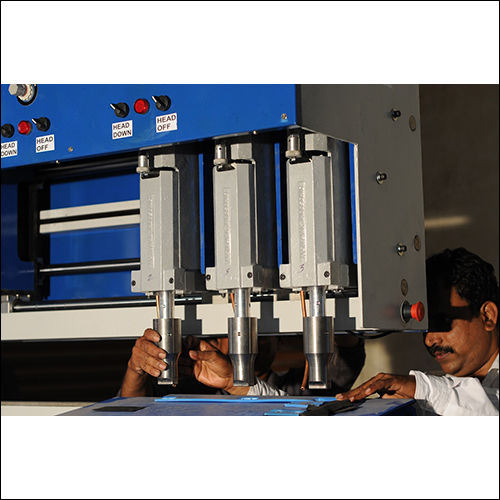
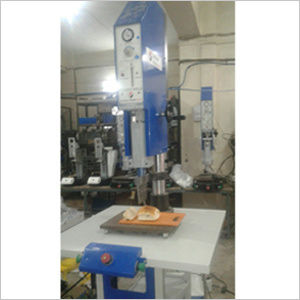
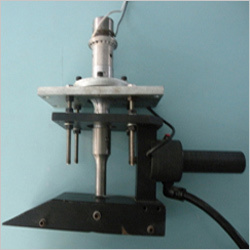
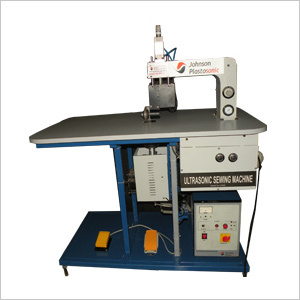
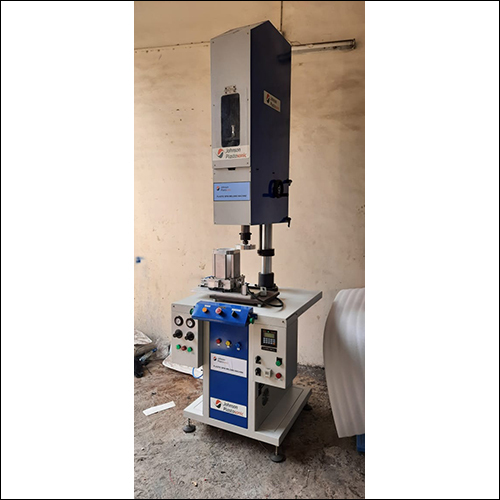
We are an amazing business partner to procure impressive in quality Ultrasonic PP Corrugated Box Welders because of quality manufacturing technique. Investment in the best technology empowers us to bring forth offered machine in several capacities. Complete guarantee of no scratched packing items and low rejection ratio makes purchasing of our offered ultrasonic energy-based product gain huge applause in the market. Our offered Ultrasonic PP Corrugated Box Welders are far away from being even slightly slow at work.
Product details
| Counter | Built cycle counter |
| Frequency Control | Tuning |
| Model Number | UPPCBW-01 |
| Phase | Single Phase |
| Protection Indicators | PLC Message |
| Ultrasonic Frequency | 20 KHz |
| Welding Head | 1 |
| Welding Sheet Thickness | 1100 Mm Max |
| Country of Origin | Made in India |
| Output Current | 200 A |
| Brand | Johnson Plastosonic |
| Automation Grade | Automatic |
| Material | Mild Steel |
| Weld Time | 4 Sec |
| Weight | 18 Kg |
| Power | 1500 W |
| Voltage | 230 V ac |
| Usage/Application | Industrial |
Combining speed, strength, and user-friendly features, this ultrasonic welder is optimized for industrial uses requiring rapid and reliable bonding of PP corrugated sheets. It achieves uniform joints at adjustable temperatures, adapting to a variety of box sizes and designs, making it ideal for export packaging and storage solutions.
Smart Digital Control and MonitoringEquipped with a microprocessor-based digital control panel and integrated ultrasonic generator, the welder allows operators to set precise welding parameters. Its digital display provides real-time feedback with indicators, ensuring accurate adjustments and minimizing user error during operation.
Safe, Reliable, and Flexible OperationOperators benefit from built-in overload and short-circuit protection, while the air-cooled system maintains optimal performance even during continuous use. Manual and semi-automatic operation modes provide flexibility for different workflow requirements, making the machine adaptable for various production scales.
FAQs of Ultrasonic PP Corrugated Box Welders:
Q: How does the ultrasonic welding process work for PP corrugated boxes?
A: Ultrasonic welding uses high-frequency mechanical vibrations, generated by the integrated ultrasonic generator, to heat and fuse the surfaces of polypropylene (PP) corrugated sheets under controlled pressure. This forms a strong, durable joint in as little as 1 to 3 seconds per weld.
Q: What are the main benefits of using this ultrasonic PP corrugated box welder?
A: This machine enables fast, clean, and consistent sealing and joining of PP corrugated boxes. It minimizes material deformation, ensures mess-free joints, and offers operational flexibility, reducing labor time and improving the productivity of packaging operations.
Q: When is it advisable to use the semi-automatic mode compared to the manual mode?
A: Semi-automatic mode is recommended for repetitive or high-volume welding tasks, as it automates part of the process and increases throughput. Manual mode is suitable for custom-sized boxes or when more control over specific welds is required.
Q: Where can this machine be installed and used effectively?
A: This welder is ideal for manufacturing plants, export packaging units, warehouses, and supplier facilities handling large quantities of PP corrugated boxes. Its compact footprint and air-cooled design make it suitable for diverse industrial environments.
Q: What is the typical process for welding a box using this machine?
A: Place the PP corrugated sheets in the designated welding area, set the required parameters on the digital control, and initiate welding using either manual or semi-automatic mode. The ultrasonic system fuses the sheets in 13 seconds per joint, as indicated by the digital display.
Q: What safety features are included in this ultrasonic welder?
A: The machine is equipped with overload and short-circuit protection to safeguard both operators and equipment, while the air cooling system helps prevent overheating during continuous operation.



 Chat with us




 johnsonplastosonic@gmail.com

 Send Inquiry
 Send Inquiry

 Send Inquiry
 Send SMS
 Call Me Free